
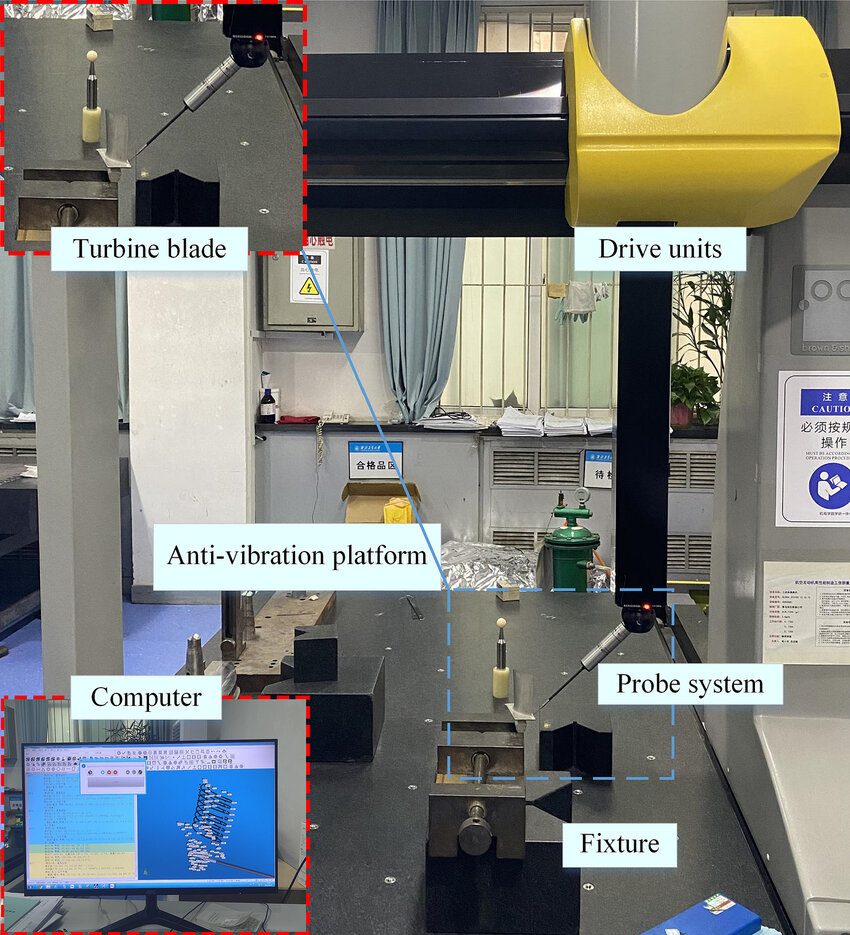
CNC precision slot profiling has become a cornerstone of advanced aerospace manufacturing, especially in the creation of multi-radius turbine blade anchor grooves that must withstand extreme thermal, mechanical, and aerodynamic forces throughout the operational lifespan of an engine. These anchor grooves, often formed in the turbine disk or blade root interface, carry significant structural responsibility by securing blades against tremendous centrifugal loads generated during high-RPM rotation. In modern turbine engines, the geometry of these slots has evolved into increasingly sophisticated multi-radius designs that balance stress distribution, improve load transfer efficiency, and enhance the fatigue resistance of both disk and blade components. As a result, the profiling process now demands machining accuracy measured in microns, along with surface integrity that maintains structural reliability even under the harshest conditions. Precision CNC technology makes this possible through adaptive toolpath algorithms, simultaneous multi-axis motion, advanced curvature compensation, and robust real-time monitoring solutions. These innovations allow manufacturers to produce anchor grooves with complex radius transitions, sharp structural definitions, and perfectly blended contours that meet aerospace-level engineering requirements. As turbine technology continues its push toward higher pressure ratios and efficiency, CNC precision slot profiling becomes increasingly essential in ensuring component longevity, mechanical stability, and optimal engine performance.
Multi-radius turbine blade anchor grooves pose unique geometric and machining challenges due to their compound curvature, variable depth, and differing cross-sectional profiles along the groove path. Unlike simple dovetail or straight-root configurations, these multi-radius anchors incorporate several blended arcs, tapered surfaces, undercut geometries, and progressive width transitions engineered to minimize stress concentrations. CNC machines must navigate these complex forms using specialized profiling strategies that maintain precise cutter-to-surface engagement while avoiding structural disturbances such as gouging, scallop mismatch, or unintentional tapering. Standard milling operations are insufficient because they cannot replicate the smooth and continuous curvature required for reliable blade anchoring. Instead, high-performance CNC solutions utilize multi-axis interpolation to dynamically adjust tool angle and position throughout every segment of the groove. This ensures consistent radial accuracy even in areas of tight curvature or narrow access. Toolpath planners implement curvature-sensitive stepovers that change automatically along the slot’s geometry, controlling scallop height and ensuring surface uniformity. At the same time, advanced simulation engines evaluate potential collision points, tool deflection behaviors, and optimal pivot angles to ensure stable machining under all conditions. The result is a perfectly formed multi-radius slot that maintains geometric consistency, reduces stress risers, and enables precise blade seating alignment.
Material considerations play a significant role in CNC precision slot profiling, as turbine disks and blade roots are typically produced from difficult-to-machine superalloys like Inconel, René alloys, and titanium-based materials. These alloys are engineered for resilience under extreme conditions but present significant machining challenges due to work hardening, low thermal conductivity, and high resistance to deformation. Profiling multi-radius anchor grooves within these materials requires specialized tooling engineered for durability, heat resistance, and chip evacuation efficiency. Form tools, toroidal cutters, barrel-shaped end mills, and multi-profile contour mills are commonly used to maintain smooth engagement across varying radii. These tools often incorporate nano-layer coatings such as AlTiN, TiSiN, or diamond-like carbon that resist high-temperature edge degradation and prolong tool life. High-pressure coolant systems deliver targeted cooling deep inside the slot, reducing thermal buildup and preventing chip recirculation—which is critical to maintaining surface integrity. When combined with adaptive feed control and vibration-dampening toolholders, these tools ensure stable engagement throughout deep and complex groove profiling. Preventing vibration or tool chatter is essential because any irregularity can result in micro-cracks that compromise fatigue performance. The integration of tooling science with advanced CNC motion control thus ensures that multi-radius turbine blade anchor grooves meet stringent aerospace quality and durability standards.
Digital manufacturing integration further elevates CNC precision slot profiling by enabling predictive, adaptive, and automated quality assurance throughout the machining process. Through advanced simulation platforms, engineers can construct digital twins of both the tool and workpiece to predict toolpath behavior, thermal interactions, and mechanical stress distribution before machining begins. These simulations identify optimal cutting parameters, detect areas prone to tool deflection, and establish precise radius blending strategies for consistent multi-geometry groove formation. Real-time probing systems measure slot depth, radius conformity, and contour accuracy directly on the machine, generating immediate feedback that eliminates the need for labor-intensive off-machine inspection. In-process scanning using high-precision metrology sensors creates a digital surface map of each groove, allowing adaptive control modules to auto-correct minor deviations by adjusting feed rates or tool orientation during cutting. Machine learning models further enhance process stability by evaluating tool wear patterns, predicting when cutters require replacement, and optimizing toolpath algorithms for subsequent production batches. This cyber-physical ecosystem creates a highly efficient manufacturing cycle where quality, repeatability, and structural integrity are assured at every stage, reducing scrap rates and ensuring perfect conformity across high-volume production runs of turbine components.
The engineering impact of CNC precision slot profiling extends directly to turbine efficiency, reliability, and long-term operational performance. Multi-radius anchor grooves determine how effectively blades are retained within the disk and how evenly mechanical loads are distributed across the root-disk interface. Enhanced radius transitions reduce peak stress concentrations, enabling smoother load transfer and improved fatigue resistance during high-cycle operation. When groove geometry is precisely machined, blade movement is minimized, significantly reducing fretting damage, micro-abrasion, and long-term wear at the contact surfaces. This also enhances thermal stability, as the component experiences less distortion during temperature fluctuations. A precisely profiled anchor groove ensures a secure mechanical lock that maintains blade positioning even under rapid throttle changes, vibration exposure, and high-speed rotational forces. The overall improvement in groove integrity results in extended service intervals, reduced maintenance costs, and enhanced overall reliability of the turbine system. As next-generation aviation, energy, and propulsion technologies push toward lighter, hotter, and more powerful turbine systems, the role of CNC-optimized groove geometry becomes increasingly vital. Manufacturers who master precision slot profiling gain a significant advantage in producing turbine components that meet the highest performance thresholds while exceeding the expectations of regulatory and safety standards.
In summary, CNC precision slot profiling for multi-radius turbine blade anchor grooves represents a highly advanced and indispensable manufacturing methodology that directly supports the structural and operational demands of modern turbine systems. Through a combination of adaptive machining strategies, advanced multi-axis motion, specialized tooling, digital metrology integration, and real-time process control, aerospace manufacturers can achieve unprecedented levels of accuracy, surface integrity, and geometric fidelity. These capabilities ensure that turbine blade anchor grooves perform flawlessly under extreme mechanical and thermal stress conditions, providing the foundation for long-term turbine reliability and efficiency. As aerospace propulsion technology continues advancing, the precision and sophistication of groove profiling will remain at the forefront of innovation, enabling more resilient engine designs and supporting the next generation of high-performance turbine applications.