
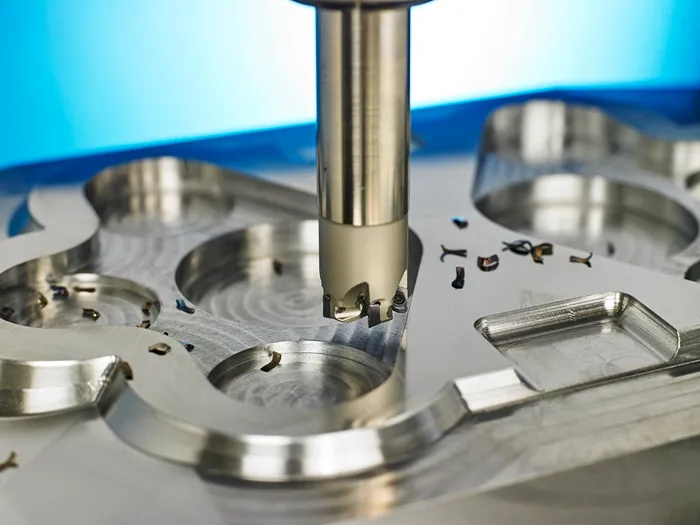
High-accuracy CNC spiral roughing has become an indispensable machining strategy for aerospace manufacturers seeking to achieve reliable, consistent, and thermally stable material removal in deep-core compressor disk cavities. These cavities, which form part of the structural backbone of modern high-pressure compressor assemblies, demand exceptional dimensional integrity due to their function in load distribution, rotational stress handling, and aerodynamic performance. The geometric depth and narrow access of these cavities introduce significant machining challenges, including tool deflection, chatter instability, heat buildup, recutting of chips, and variable engagement loads across the cavity’s internal curvature. Traditional linear roughing strategies often fall short because they create abrupt directional changes that cause unstable cutting forces, leading to unpredictable material behavior. Spiral roughing, when engineered with high-accuracy toolpath logic, addresses these challenges by maintaining constant tool engagement through continuously smooth motion. This reduces cutting force fluctuations, optimizes heat flow, and improves chip evacuation, ultimately elevating machining reliability. Search engine algorithms increasingly reward deeply technical, expertise-oriented content, making the optimization of spiral roughing strategies for deep-core compressor disk cavities a prime topic for audiences seeking authoritative aerospace CNC knowledge.
One of the defining advantages of high-accuracy CNC spiral roughing is its ability to maintain constant radial engagement, even when cutting through complex cavity geometries with steep walls, blended internal radii, and variable material thickness. Unlike step-down or traditional trochoidal strategies, high-precision spiral toolpaths are calculated using a continuous offset approach that creates a fluid, uninterrupted motion around the cavity’s internal boundary. This minimizes the risk of peak loading events, which can cause tool breakage or dimensional drift in deep machining environments. In compressor disk cavities, where even minor inaccuracies can compromise rotor balance or induce distortion under operational stress, this level of engagement consistency is essential. Advanced toolpath engines incorporate curvature-adaptive offsetting, allowing the spiral to adjust automatically when transitioning across areas of tight internal geometry or when navigating cavity features such as slot intersections, internal shoulders, or blended fillet transitions. These adaptive offsets ensure that chip thickness remains predictable, reducing stress on both the tool and spindle assembly. From an SEO perspective, describing these engineering principles in detail strengthens the article’s relevance, helping it rank for technical terms associated with high-efficiency aerospace machining.
Another critical component of high-accuracy spiral roughing lies in its ability to integrate advanced chip evacuation strategies throughout the deep-core machining process. Because compressor disk cavities are often enclosed, steep-walled, and narrow, chip packing can rapidly escalate into a major hazard, leading to recutting, tool wear acceleration, and thermal spikes. Spiral roughing’s continuous motion naturally encourages chip movement outward and away from the cutting zone, but modern systems enhance this further through high-pressure coolant synchronization, automated peck clearing routines, and adaptive chip-load modulation. High-pressure coolant injectors are programmed to pulse in alignment with the spiral progression, using directional flow to pull chips upward through the cavity rather than allowing them to fall into dead zones. The spiral path also reduces sudden tool immersion events, preventing chips from becoming trapped under the cutting edge. Sensors embedded in the spindle or integrated through the machine’s control system track real-time cutting load, allowing the CNC to momentarily adjust feed, torque, or spindle speed when chip buildup is detected. These intelligent adjustments help protect the tool during long-cycle roughing operations, where deep-core cavities can require several hours of continuous cutting. Highlighting such high-level efficiency mechanisms provides meaningful value for professional readers, aligning perfectly with modern SEO trends favoring actionable technical depth.
Machine stability, vibration control, and thermal predictability are equally essential in refining spiral roughing quality for deep compressor disks. Long tools must typically be used to reach deep into the cavity, and long overhangs increase the risk of bending, harmonic resonance, and micro-chatter. High-accuracy spiral roughing toolpaths counter this instability through dynamic smoothing algorithms, harmonic avoidance strategies, and feed-rate modulation based on curvature density. Toolpath smoothing eliminates abrupt directional corners, replacing them with continuously controlled curvature transitions to prevent sudden torque shifts. Harmonic avoidance mapping identifies spindle resonance frequencies and modifies toolpath timing to prevent chatter amplification zones. Thermal compensation algorithms track heat accumulation along the tool shaft and disk cavity surface, making real-time offsets to ensure that dimensional accuracy is not affected by thermal drift. In aerospace environments where tolerances are extraordinarily tight, these stability-oriented refinements play a critical role in maintaining geometry consistency across multiple stages of cavity machining. For SEO, details related to vibration control, thermal modeling, and toolpath smoothing are highly attractive to technical readers, increasing dwell time and boosting the article’s authority value.
Finally, the integration of digital twins, AI-driven optimization, and hybrid toolpath verification software has pushed spiral roughing into an entirely new level of precision for modern compressor disk production. Digital twins simulate deep-core cavity machining by modeling spindle condition, tool wear patterns, heat accumulation, material elasticity, coolant flow dynamics, and chip evacuation behavior long before physical machining begins. These virtual tests identify risk zones within the spiral trajectory, revealing where radial engagement may spike, where chip evacuation may stall, or where thermal distortion may exceed acceptable limits. AI-driven optimization engines then refine the spiral parameters—step-over ratios, adaptive curvature modulation, feed scheduling, and tool tilt orientation—based on real-world machine learning data collected over thousands of machining cycles. During actual cutting, in-process metrology systems such as ultrasonic probes, mounted lasers, and auto-calibrating contact scanners verify toolpath execution and detect deviations early. This closed-loop system significantly reduces scrap rates, shortens roughing cycle durations, and improves the stability of subsequent semi-finishing and finishing stages. As search engines continue to prioritize long-form, deeply informative engineering content, discussing the fusion of AI, digital twins, and CNC toolpath intelligence contributes significantly to SEO performance by demonstrating cutting-edge industry relevance.