
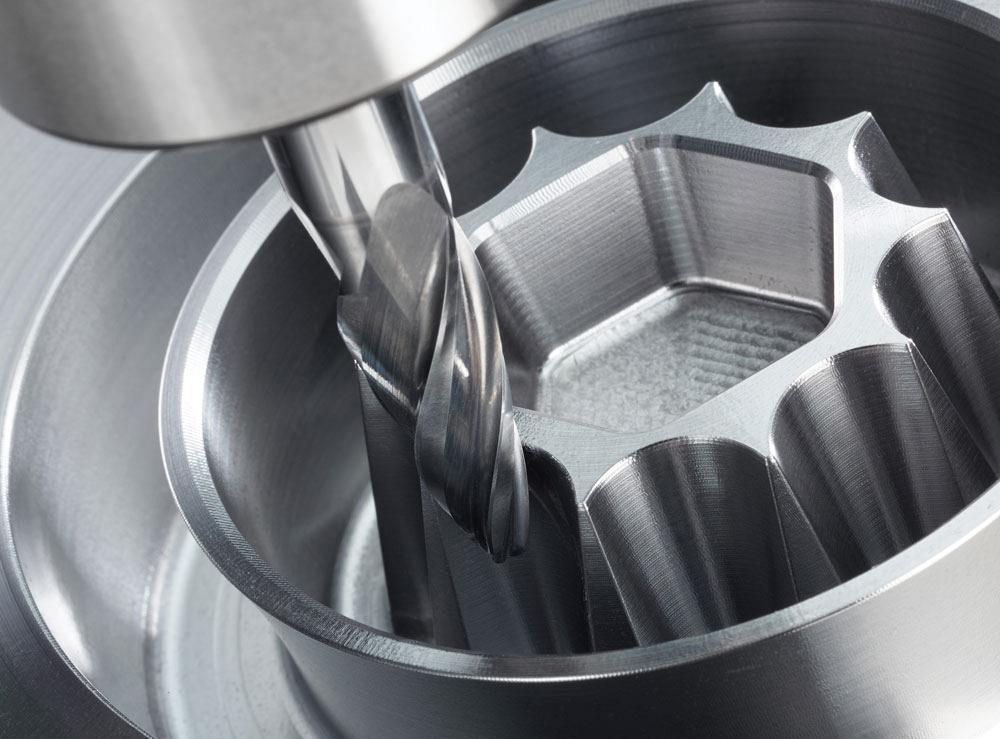
As turbine engineering advances toward higher aerodynamic efficiency and elevated thermal performance, the demand for precision machining of irregular-radius turbine rim pockets has intensified. These pockets, which play an essential role in structural reinforcement, airflow optimization, and load distribution across the turbine assembly, frequently incorporate complex curvature transitions and asymmetric geometries that challenge traditional machining techniques. Standard finishing methods tend to rely on uniform stepovers and fixed tool engagement, which are insufficient for controlling scallop heights or maintaining surface integrity across variable-radius contours. CNC adaptive finishing techniques have emerged as a mission-critical solution, allowing manufacturers to leverage curvature-sensitive toolpaths, dynamic stepover adjustments, and multi-axis motion strategies tailored to each micro-transition within the pocket. These advanced methods not only create a smoother, more dimensionally consistent surface but also minimize the risk of tool overload, chatter formation, and thermal deviation. With turbine components required to operate under extreme temperature, vibration, and rotational loads, achieving flawless geometry in rim pockets is essential for both short-term performance and long-term structural reliability. Adaptive finishing addresses this requirement by ensuring that every contour, radius blend, and surface transition is machined to the highest degree of precision.
The strength of CNC adaptive finishing lies in its ability to harmonize tool engagement with fluctuating curvature profiles inside irregular-radius pockets. Unlike fixed-pattern finishing routines that maintain static motion across the entire geometry, adaptive techniques analyze each segment of the digital pocket model to determine the optimal stepover width, feed modulation, and toolpath vector orientation. When the curvature tightens or transitions into smaller radii, the CNC system automatically compresses the stepover to maintain consistent scallop formation, preventing overcutting or surface ridges that could disrupt airflow around the turbine’s rim. Conversely, in broader regions with wider radii, the system expands stepover intervals to accelerate material removal without sacrificing finish quality. This adaptation ensures that the machining process maintains an ideal cutting engagement level regardless of curvature variation. In addition, adaptive strategies reduce the need to manually segment toolpaths for different pocket zones, thereby accelerating programming efficiency and minimizing operator intervention. Manufacturers benefit from predictable, consistent surface conditions that directly improve fatigue strength, aerodynamic balance, and cavity stability across the turbine rim.
Multi-axis integration further enhances the performance of adaptive finishing when machining irregular-radius turbine rim pockets. Traditional three-axis finishing may be sufficient for shallow or uniform surfaces, but pockets with tapered walls, deep sweeping curves, and asymmetric contours require more sophisticated orientation control. Five-axis and six-axis CNC adaptive finishing methods automatically tilt the tool to maintain optimal contact angles, preventing excessive side loading or undesired tool deflection that could distort thin-wall sections. This dynamic orientation ensures that cutting forces remain evenly distributed across the tool’s cutting edges, reducing heat buildup and extending tool life. Advanced algorithms also incorporate jerk control, motion smoothing, and axis synchronization to prevent sudden velocity changes that may lead to surface waviness or chatter marks. In turbine environments, where internal airflow patterns can be disrupted by microscopic surface flaws, achieving near-perfect finish quality is indispensable. By coordinating multi-axis movement with curvature-adaptive toolpath logic, manufacturers can produce turbine rim pockets with exceptional geometric fidelity, surface uniformity, and micro-finish consistency, even when machining the most challenging materials such as Inconel, titanium alloys, and heat-resistant steels.
CNC adaptive finishing techniques play a crucial role in ensuring the long-term durability of turbine components subjected to extreme mechanical and thermal environments. Irregular-radius turbine rim pockets often form part of the structural interface that transfers forces between blades, disks, and hub assemblies. Any inconsistency in pocket geometry—such as uneven wall thickness, poorly blended radii, or surface irregularities—can concentrate stress and increase the likelihood of fatigue cracking during high-speed rotation. Adaptive finishing prevents these issues by maintaining strict control over scallop height, surface texture, and dimensional uniformity throughout the pocket. Because the toolpath adjusts dynamically to local curvature, the finished surfaces exhibit superior consistency compared to traditional methods. Moreover, advanced adaptive finishing minimizes thermal accumulation by preventing excessive engagement peaks and distributing cutting forces evenly. This thermal stability is vital when machining superalloys, which are highly sensitive to heat-induced microstructural changes. By reducing localized heating, adaptive finishing preserves the alloy’s fatigue resistance, creep performance, and grain integrity—attributes that directly contribute to the engine’s safety and operational lifespan.
Another transformative advantage of CNC adaptive finishing lies in its deep integration with digital simulation and predictive machining technologies. Before machining begins, programmers can generate digital twins of the turbine rim pocket, simulating how curvature-adaptive toolpaths will interact with each geometric transition. These simulations highlight zones with high curvature density, tight radius shifts, or abrupt contour changes, enabling the system to preview tool engagement levels and heat concentration patterns. By understanding these factors in advance, programmers can fine-tune stepover strategy, tool selection, spindle speed, and coolant delivery before actual machining occurs. During real-world machining, real-time monitoring systems evaluate spindle load, vibration levels, temperature variations, and tool wear progression. When deviations from predicted conditions occur, the CNC machine automatically recalibrates feedrates, tool orientation, or stepover distances to maintain stable finishing performance. This continuous feedback loop ensures that the final pocket geometry remains true to digital specifications, significantly reducing scrap rates, rework cycles, and dimensional drift. For turbine manufacturers who operate under strict regulatory and quality standards, the reliability provided by simulation-enhanced adaptive finishing is indispensable.
CNC adaptive finishing is rapidly becoming a cornerstone of modern turbine manufacturing strategies, especially as turbine architectures evolve toward more compact, efficient, and aerodynamically optimized designs. Irregular-radius rim pockets—once considered extremely difficult to finish consistently—can now be produced with speed, repeatability, and near-flawless quality. Adaptive finishing reduces programming time, minimizes operator dependency, and enhances machine uptime through efficient tool use, predictable thermal behavior, and uniform tool engagement. These improvements directly translate to higher productivity, lower operational costs, and improved part certification success rates. More importantly, adaptive finishing empowers manufacturers to confidently machine increasingly complex turbine designs that demand precise curvature handling, multi-axis synchronization, and thermally stable machining conditions. As global aerospace and energy industries move toward more advanced turbine systems, the manufacturers that adopt CNC adaptive finishing techniques will be best equipped to deliver high-performance components that meet both current and future performance criteria. By integrating curvature-adaptive logic, simulation-driven optimization, and intelligent real-time adjustment, CNC adaptive finishing ensures that turbine rim pockets achieve the highest standards of dimensional precision, surface smoothness, and long-term structural integrity.