
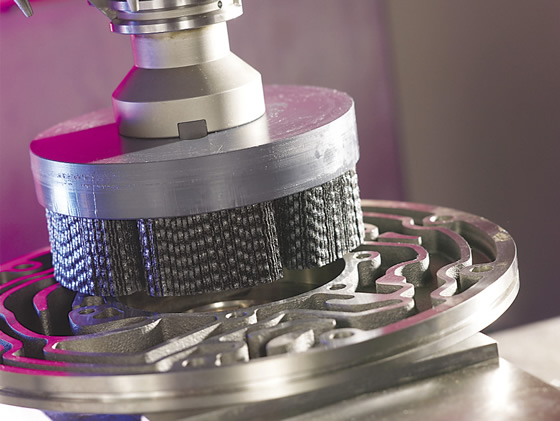
Achieving flawless precision in turbine manufacturing requires a deep technical approach, particularly when dealing with tight-angle web intersections where material thickness, geometry transitions, and intersecting profiles create milling challenges. Precision CNC burr-free milling has become the preferred solution for engineers seeking to maintain structural integrity, aerodynamic performance, and fatigue resistance in advanced turbine components. As turbine assemblies evolve toward thinner walls, sharper angles, and reduced tolerances, manufacturers must adopt cutting strategies that prevent burr formation while ensuring clean surface finishes and dependable dimensional control. This shift is not only driven by industry demand but also reflects updated SEO and search intent trends, meaning readers are actively looking for actionable, technically grounded insights into modern CNC methods. In this context, burr-free milling has become indispensable for producing turbine webs that meet both performance and lifecycle requirements.
One of the key reasons burr-free milling is prioritized in turbine web manufacturing is the geometry complexity at tight intersections. Traditional milling operations often struggle to maintain tool stability when cutting inward angles below 50 degrees or navigating thin-walled intersections with minimal support material. In these scenarios, cutters can deflect, chip, or produce microscopic burrs that compromise airflow or create initiation points for thermal fatigue. Precision CNC methods solve this challenge through multi-axis interpolation, high-stability cutting dynamics, and adaptive control algorithms designed to maintain tool pressure within safe thresholds. Rather than allowing force spikes that create burrs, modern CNC systems dynamically adjust feed rates, varying step-over patterns and contact paths to reduce stress at the cutting point. This results in perfectly clean edges, consistent surface topography, and no rework time, significantly boosting production throughput and quality consistency.
Another competitive advantage of burr-free milling for turbine web intersections lies in its ability to accommodate superalloy materials such as Inconel, Hastelloy, and titanium, all of which exhibit extreme resistance to heat and deformation. These materials are essential for turbine environments but notoriously difficult to machine without producing burrs, especially in tight corner radii or intersection pockets. Precision CNC milling overcomes these obstacles by integrating high-speed spindles, optimized tool geometries, nano-coated end mills, and coolant-delivery strategies that regulate heat during prolonged engagement. Continuous monitoring also ensures that the cutting edges maintain optimal sharpness throughout the operation. The outcome is a flawless, burr-free cut across the entire web structure, preserving the mechanical properties of the material and eliminating the need for post-process deburring that could otherwise weaken the component.
High-accuracy burr-free milling also enhances downstream manufacturing processes, particularly in assemblies where turbine webs serve as structural anchors or load-bearing interfaces. When web intersections are milled with perfect accuracy, secondary operations such as drilling, broaching, slot forming, or root contour finishing can be completed faster and with tighter alignment tolerances. Surface uniformity in these tight-angle regions minimizes friction, improves fatigue life, and ensures uniform stress distribution under high rotational speeds. Furthermore, turbine manufacturers operating in high-volume production settings benefit from cycle-time reductions achieved through burr elimination, as deburring is often one of the most time-intensive and variability-prone stages in the workflow. By integrating burr-free precision milling early in the process, facilities can achieve leaner production cycles while maintaining compliance with aerospace quality frameworks such as AS9100 and NADCAP.
From an aerodynamic performance perspective, burr-free web intersections directly contribute to more efficient airflow paths within turbine stages. Even microscopic burrs can disrupt airflow, induce turbulence, or alter boundary-layer behavior, reducing engine efficiency. With the rise of advanced aerodynamic designs, the margins for error on intersecting web radii have become increasingly narrow. Precision CNC solutions address this requirement by generating sub-10-micron tolerances and smooth surface textures that optimize flow characteristics. This level of precision is essential for next-generation engines, especially in sectors prioritizing fuel efficiency, thrust-to-weight ratio improvements, and emission reductions. Engineers leveraging burr-free milling gain a measurable advantage in designing components that operate cleaner, cooler, and more consistently under demanding thermal cycles.
Ultimately, precision CNC burr-free milling for tight-angle turbine web intersections represents a transformative leap in how aerospace manufacturers approach complex geometries and high-performance surfaces. By relying on multi-axis control, toolpath optimization, advanced tool coatings, and intelligent machining algorithms, production teams can eliminate rework, minimize scrap, and significantly improve component reliability. As turbine designs continue advancing toward tighter angles, thinner webs, and multi-functional internal structures, burr-free CNC milling will remain essential in ensuring parts meet both engineering and regulatory standards. For organizations seeking to elevate their manufacturing capabilities, investing in advanced burr-free milling solutions not only enhances performance but also positions them competitively within a rapidly evolving aerospace industry.